

The News
Anysphere, the company behind AI coding assistant Cursor, announced it's hit $1 billion in annualized revenue and recently raised $2.3 billion at a $29.3 billion valuation. CEO Michael Truell, speaking at Fortune's AI Brainstorm conference, made clear the company isn't thinking about an IPO anytime soon. Instead, they're focused on building out more features — including proprietary LLMs, complex agentic capabilities, and team-oriented tooling.
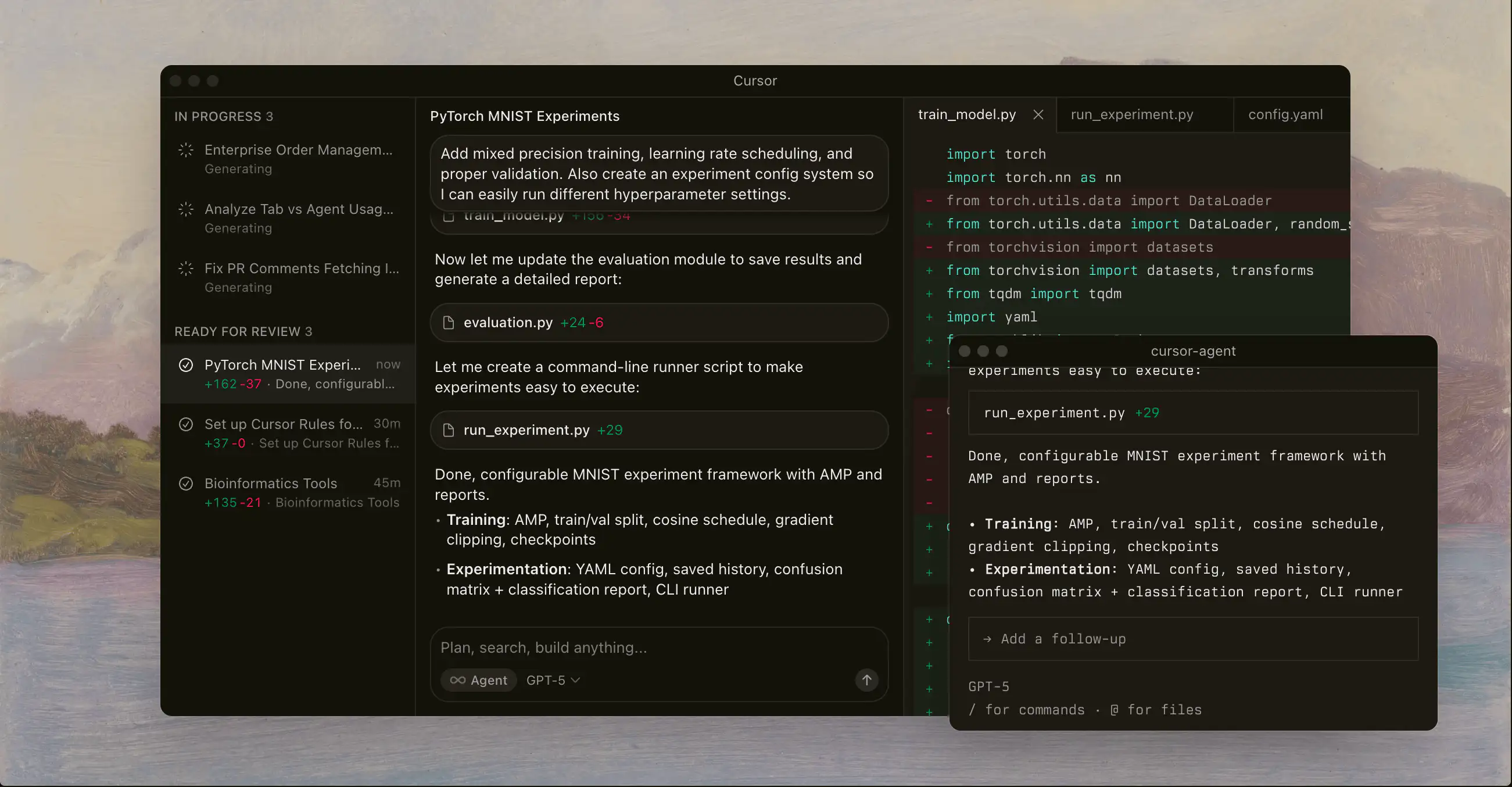
The "concept car vs. production car" framing is enterprise GTM gold. When Truell compares OpenAI and Anthropic's coding tools to concept cars and Cursor to a production automobile, he's doing something smart: he's reframing the competitive narrative entirely. He's not trying to win the "who has the best model" debate — he's changing the question to "who has the best product."
This matters because enterprise buyers don't care about benchmark scores. They care about whether the thing works reliably in their stack, with their team, on their timeline. By positioning Cursor as the integrated solution — "we take the best intelligence that the market has to offer from many different providers" — Truell is signaling that Cursor is the Switzerland of AI coding. That's a defensible position.
The "teams as the atomic unit" comment is the buried lede. Truell mentioned thinking about teams rather than individual coders as their core unit. This signals Cursor is making serious enterprise moves. Individual developer tools are a brutal market — low switching costs, high churn, endless competition. Team-level tooling is where the real enterprise contracts live: procurement approval, multi-seat licensing, usage monitoring, compliance. When a company starts talking about "teams as the atomic unit," they're telegraphing that their enterprise sales motion is working.
Building proprietary models for product-specific use cases is the right call. Cursor's in-house models "now generate more code than almost any other LLMs in the world." This isn't about competing with foundation models on general intelligence — it's about building specialized capabilities that make the product stickier. It's the classic "application layer company building selective vertical integration" play. Smart, but table stakes at this point for any serious AI application company.
The code review product shows they understand the full SDLC. Shipping a code review tool that analyzes every pull request — AI-written or human-written — shows Cursor isn't just thinking about generation. They're thinking about the whole software development lifecycle. That's good. It also creates more surface area for enterprise value: governance, compliance, quality control.
The pricing pivot caused real customer damage. Let's not sugarcoat this: Cursor shifted from an all-inclusive subscription to a consumption model in July, and it "caused an uproar among some of its users." When Truell explains this as "the pricing model had to shift," that's accurate — but the execution clearly hurt customer trust. Enterprise buyers remember when vendors surprise them with billing changes. That's a scar that takes time to heal, especially with CIOs who have to justify software spend.
The competitive moat question remains unresolved. Amazon just released a coding tool that can run for days. OpenAI, Anthropic, Microsoft, AWS, and others just formed a consortium for agentic interoperability standards. Everyone is racing toward the same destination: complex, multi-step agentic coding that can handle end-to-end tasks. Truell's roadmap — handling bugs that take "weeks of someone's time, thousands of times running the code" — is exactly what every other player is promising. The question isn't whether Cursor can get there; it's whether they can get there in a differentiated way that matters.
Avoiding IPO talk might signal more than patience. When a $29B company says they're "not thinking about an IPO any time soon," it could mean they're focused on product. It could also mean the market conditions aren't right, or the business fundamentals (profitability, unit economics after the pricing shift) aren't ready for public scrutiny. Given that AI coding editors were reportedly "losing money thanks to high costs they paid to the model makers," the consumption pricing shift was likely survival, not just optimization.
Cursor's trajectory illustrates a pattern we're seeing across AI application companies: the pivot from individual tool to enterprise platform is the defining GTM challenge of 2025.
The playbook looks like this:
Cursor is executing this playbook at an elite level — $1B ARR speaks for itself — but they're not alone. Every AI application company that depends on third-party models is running the same race.
Cursor has built something real: $1B in revenue, a product developers genuinely love, and a credible enterprise roadmap. But the "concept car vs. production car" framing only works if you stay ahead of the factory. OpenAI, Anthropic, Microsoft, and Amazon are all building their own production lines.
My prediction: Watch the "teams as atomic unit" bet closely. If Cursor can crack genuine team-level orchestration — not just seat licenses, but actual workflow integration across engineering orgs — they build a moat that model providers can't easily cross. That's the path to IPO readiness. Everything else is a feature war they might not win.
What's your take: Is Cursor's enterprise pivot happening fast enough?


.svg)


