

CoreWeave CEO Michael Intrator took the stage at Fortune's Brainstorm AI summit this week to defend his company's turbulent year. The AI cloud infrastructure provider — which went public in March, saw its stock swing from $40 to $150 and back to $90, and carries significant debt — is positioning itself as a misunderstood disruptor. Most notably, Intrator defended the AI industry's "circular" investment deals (where Nvidia invests in CoreWeave while also being its GPU supplier) as companies simply "working together."
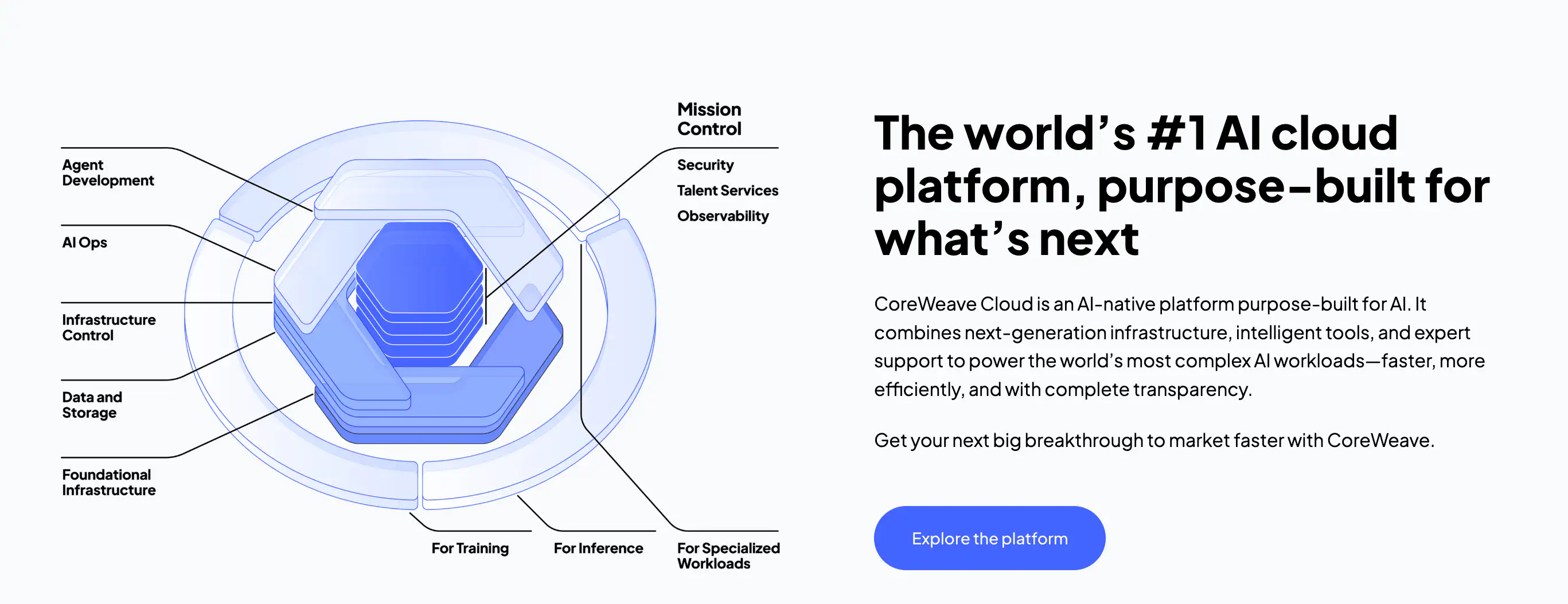
The pivot narrative is actually compelling. CoreWeave started as a crypto miner and transformed into a critical AI infrastructure provider with partnerships spanning Microsoft, OpenAI, Nvidia, and Meta. That's a genuine strategic transformation, not just a rebrand. When Intrator talks about creating a "new business model" for cloud computing, he's not entirely wrong — borrowing against GPU assets to finance expansion is genuinely novel.
The acquisition strategy shows GTM sophistication. Weights & Biases, OpenPipe, Marimo, Monolith — these aren't random pickups. They're building a full-stack developer platform play. The OpenPipe acquisition (reinforcement learning for AI agents) is particularly timely given where enterprise AI deployment is heading. Someone on that team understands where the puck is going.
The federal market expansion is smart positioning. Government cloud infrastructure for defense and agencies is a massive, sticky revenue opportunity. It's also a credibility signal — federal contracts require a level of scrutiny that validates your operational maturity. This is exactly the kind of diversification investors should want to see.
Stock volatility isn't necessarily a death sentence. Intrator's point about IPO timing around "Liberation Day" (Trump's tariff announcement) is fair. The March 2025 market was genuinely chaotic. Plenty of solid companies have had rocky public market debuts.
The "circularity" defense is weak tea. When your investor is also your supplier (Nvidia), and you're both invested in the same customers (OpenAI, Microsoft), calling it "working together" doesn't make the structural questions go away. Enterprise buyers evaluating CoreWeave need to understand: Is this company's growth driven by genuine market demand, or by a closed loop of related parties moving money around?
Here's the thing: "Companies are trying to address a violent change in supply and demand" is a description, not a justification. The question isn't whether circular deals exist — it's whether they create artificial demand signals that will collapse when the music stops.
The debt story keeps getting louder. Announcing more debt issuance for data center buildout — right as you're defending your stock volatility — is a bold choice. The 8% stock drop that followed suggests the market is paying attention. At some point, "we're disrupting finance" becomes indistinguishable from "we're overleveraged."
The "people are myopic" framing is a red flag. When a CEO's primary defense is that critics just don't understand the vision, experienced enterprise buyers get nervous. We've heard this before. Sometimes the myopic people are right.
This is a masterclass in narrative stress-testing — and CoreWeave is showing some cracks.
Every AI infrastructure company right now is running the same playbook: massive capital deployment, debt-financed expansion, and a story about being essential to the AI revolution. CoreWeave's challenge is that their story has more moving parts than most: crypto origins, GPU collateralization, circular investment relationships, and a stock price that moves like a meme stock.
What I've seen across hundreds of enterprise transformations is that buyer confidence follows narrative coherence. When a company's CEO spends more time explaining why critics are wrong than articulating why customers win, that's a signal. Not necessarily a fatal one — but a signal.
Enterprise buyers evaluating CoreWeave partnerships should be asking:
CoreWeave might be exactly what Intrator says it is: a misunderstood disruptor building the future of AI infrastructure. Or it might be a highly leveraged bet on AI demand that's one market correction away from serious trouble.
The honest answer is we don't know yet. But the CEO's defensive posture this week didn't make the bull case stronger.
What to watch: The federal contracts. If CoreWeave can land meaningful government infrastructure deals, that's validation that transcends the circular AI economy. If the federal push stalls, the "working together" narrative gets a lot harder to sell.
What's your read on CoreWeave? Is this disruptor energy or debt-fueled hype?



.svg)


