

You've got a superior product, a willing champion inside the account, and a deal that should close in 90 days. Six months later, you're still "in process."
The standard advice on how to speed up enterprise sales cycles is everywhere—map stakeholders, multithread, create urgency. All true. All insufficient.
There's a hidden variable that determines enterprise sales velocity, and most AI founders never address it.
Why Enterprise Sales Cycles Stall: The Usual Suspects
Enterprise sales cycle acceleration typically focuses on:
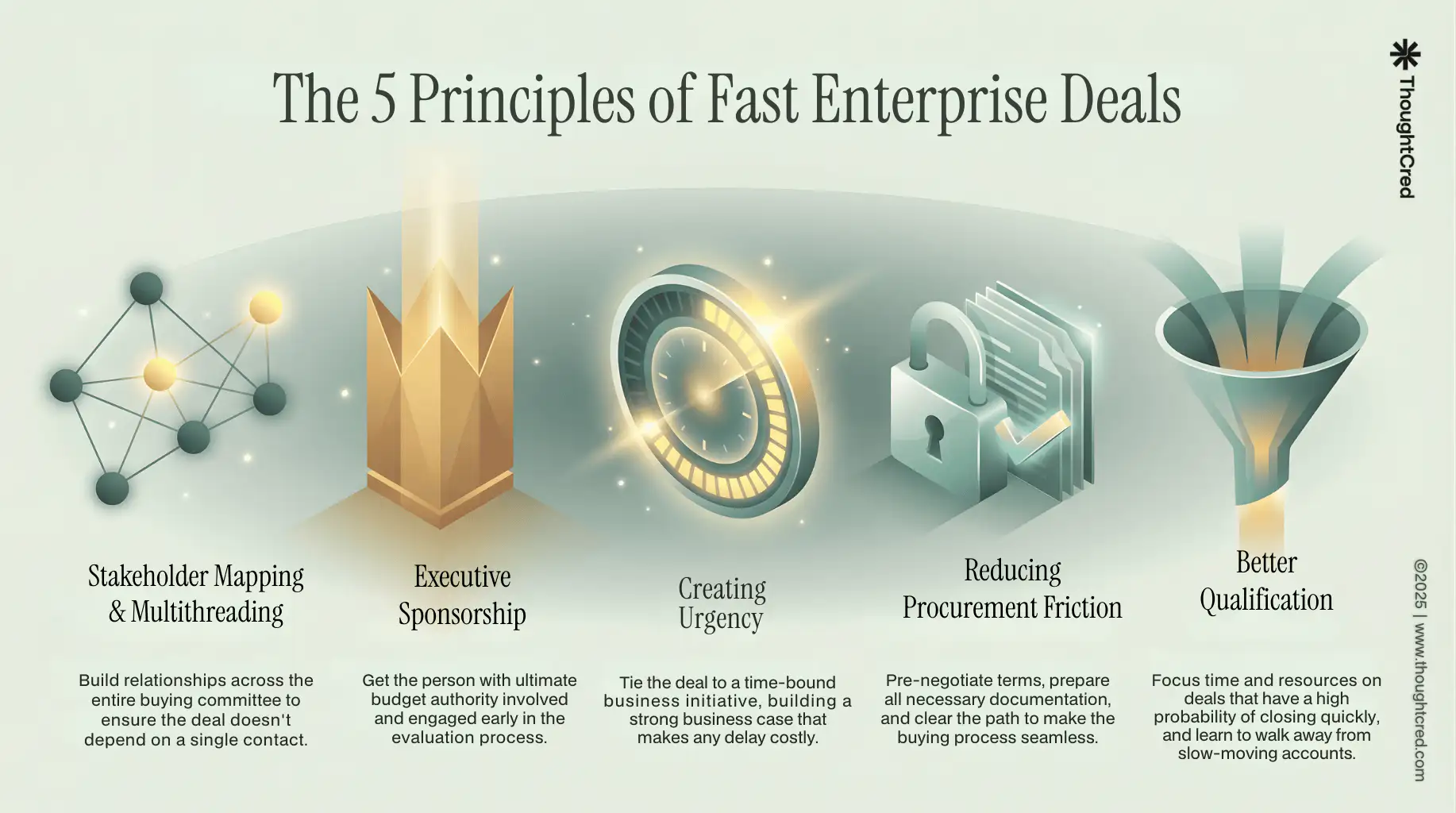
Stakeholder mapping and multithreading. Get to power early. Build relationships across the buying committee. Don't let your deal depend on a single contact.
Executive sponsorship. Find the person who can write the check and make sure they're engaged before you're deep in evaluation.
Creating urgency. Tie your solution to a business initiative with a deadline. Build a business case that makes delay expensive.
Reducing procurement friction. Pre-negotiate terms. Have security documentation ready. Make it easy to say yes.
Better qualification. Spend time on deals that can actually close quickly. Walk away from slow-moving accounts.
These tactics matter for shortening enterprise sales cycles. But they address how you sell. They don't address what happens when you're not in the room.
The Room You're Never In: Where Enterprise Sales Cycles Really Slow Down
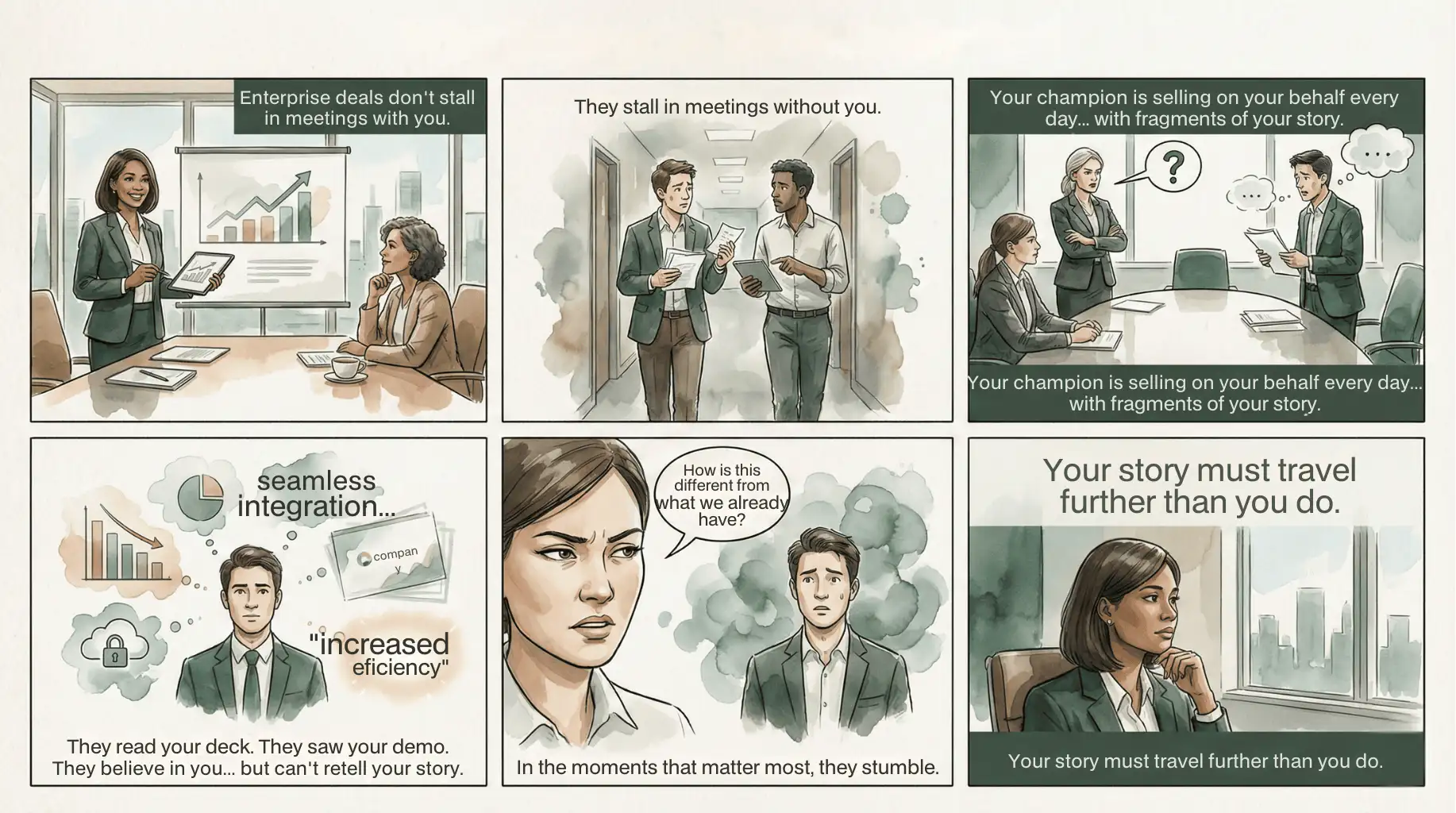
Enterprise deals don't stall in meetings with you. They stall in meetings without you.
The internal budget review you weren't invited to. The hallway conversation between your champion and their skeptical peer. The executive briefing where your champion has 3 minutes to explain why this matters.
Your champion is selling on your behalf every day. But they're selling with whatever fragments of your story they can remember and retell.
They sat through your demo. They read your deck. They believe in your product. But when their CFO asks "why this vendor?" or their peer asks "how is this different from what we already have?"—they stumble.
Not because they don't support you. Because you never gave them a story they could own.
The speed of your enterprise sales cycle is determined by how well your champion can tell your story without you.
The Champion's Dilemma: The Hidden Bottleneck in Enterprise Sales
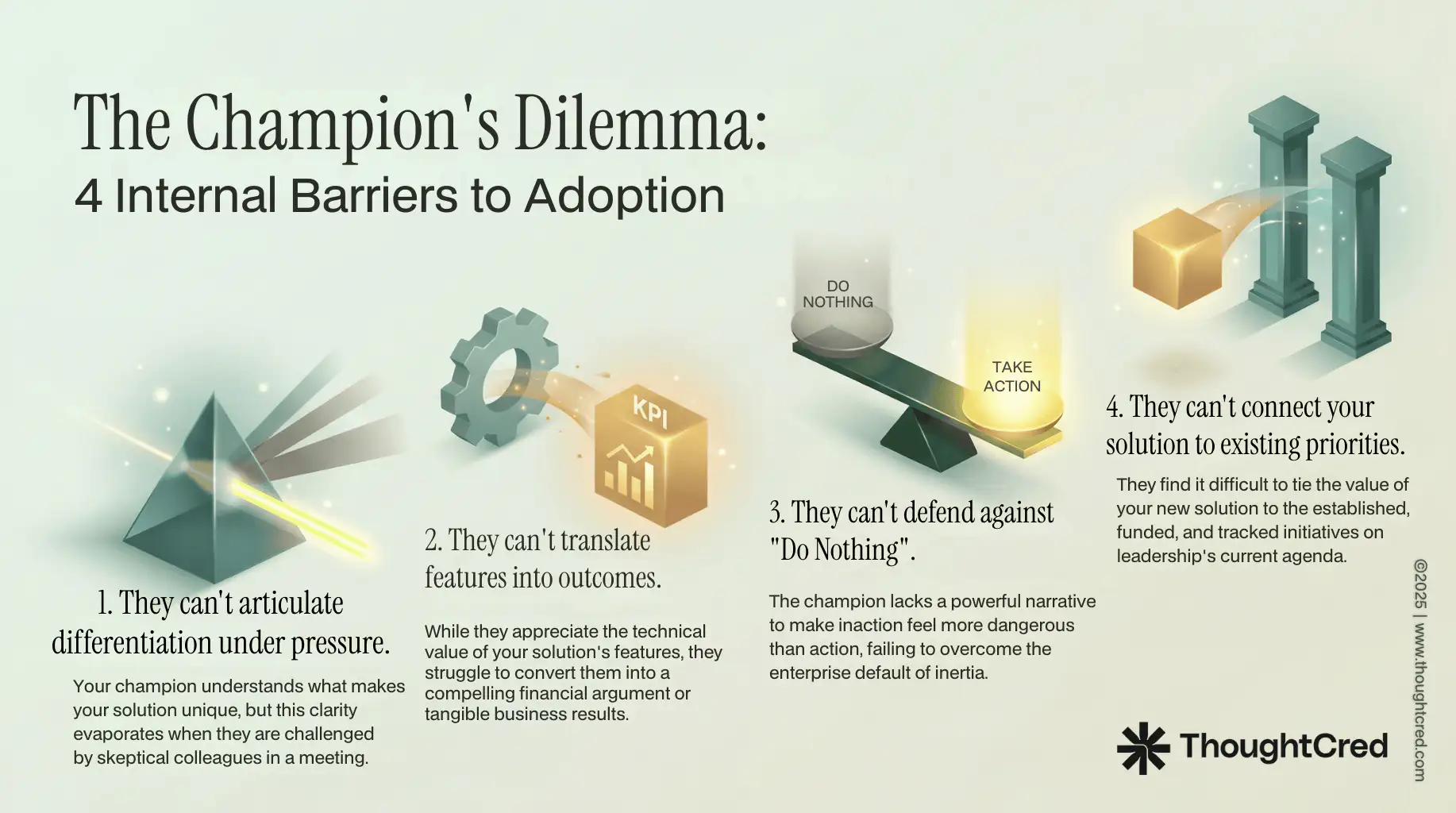
Your champion wants to move this forward. They're bought in. But they're stuck:
They can't articulate differentiation under pressure. In your demo, the difference was obvious. In a conference room with skeptical colleagues, it evaporates. They know you're better but can't explain why in terms that land.
They can't translate features to outcomes. They understood the technical value. But when finance asks "what does this mean for our numbers?"—they reach for your ROI calculator and lose the room.
They can't defend against "do nothing." The safest decision in any enterprise is no decision. Your champion needs a narrative that makes inaction more dangerous than action. Most don't have it.
They can't connect to existing priorities. Your solution is new. Their leadership's agenda isn't. If your champion can't tie your value to something already approved, funded, and tracked—you're fighting for discretionary attention.
This isn't a champion problem. It's a narrative problem.
You've given them information. You haven't given them ammunition. And without ammunition, your enterprise sales cycle drags.
What Actually Accelerates Enterprise Sales Cycles
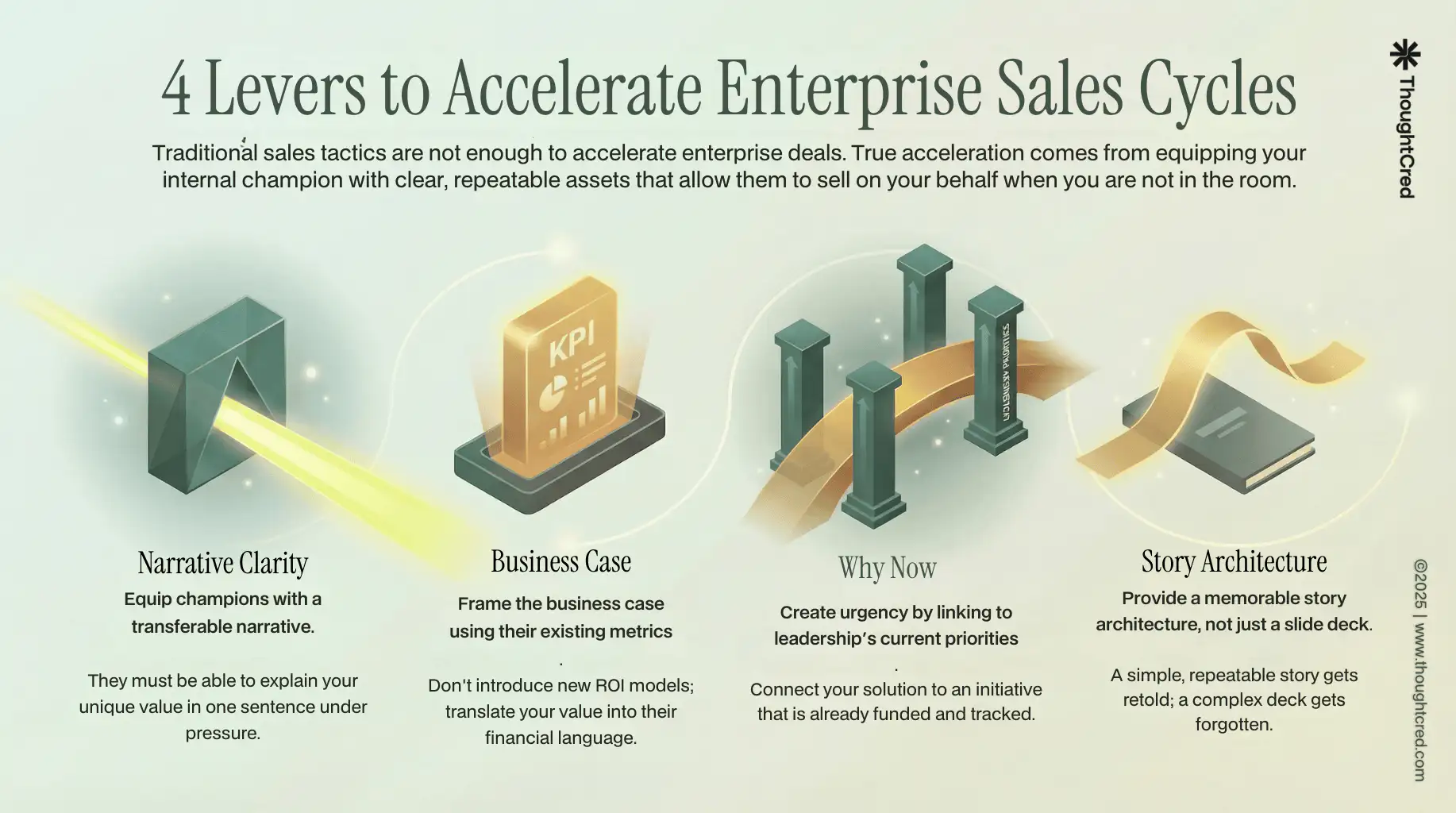
The fastest-closing AI companies don't just sell well. They equip well.
Narrative clarity that transfers. Your champion should be able to explain your differentiation in one sentence that survives a skeptical audience. Not your tagline—a genuine insight about the problem that makes your approach feel inevitable.
Business case that fits their mental model. Your ROI framework should match how their finance team already evaluates investments. If you're introducing new metrics, you're adding friction. Translate your value into their existing language.
"Why now" that connects to their agenda. The most compelling urgency isn't artificial deadlines. It's connecting your solution to initiatives their leadership already cares about. Your champion should be able to say: "This accelerates the thing we're already trying to do."
Story architecture, not slide decks. Decks get forgotten. Narrative structures get repeated. The goal isn't to arm your champion with materials. It's to arm them with a story simple enough to remember and compelling enough to repeat.
Here's the test: If your champion had to pitch your solution in an elevator with their CEO tomorrow, could they do it without any of your materials?
If not, your enterprise sales cycle will move at the speed of your next scheduled meeting—not the speed of their internal conversations.
Building Narrative Intelligence to Speed Up Enterprise Sales
The fastest enterprise AI companies treat narrative as infrastructure, not marketing.
They don't just create content. They build what we call Narrative Intelligence—the strategic architecture that lets your story win rooms you're never in. This is how they consistently speed up enterprise sales cycles while competitors stall.
This means:
Extracting the core narrative from founder expertise. The insight that makes your company inevitable lives in the founder's head. Most sales and marketing efforts dilute it. Narrative Intelligence captures and codifies it.
Translating into structures champions can own. Not scripts. Not talk tracks. Narrative frameworks flexible enough to adapt to any conversation but clear enough to stay coherent.
Arming every stakeholder conversation. Your champion talks to procurement differently than engineering differently than finance. Each needs a version of your story that speaks to their concerns—but all versions need to ladder up to the same strategic narrative.
It's not about better content. It's about building a story that sells without you—and accelerates every enterprise sales cycle you enter.
The Real Lever for Faster Enterprise Sales Cycles
Return to that deal that should close in 90 days.
The difference between 90 days and 9 months often isn't your sales process. It's whether your champion can carry your narrative through the conversations you'll never see.
Every day your champion struggles to explain your value is another day of delay. Every internal meeting where your differentiation gets muddled is another week added to your enterprise sales cycle.
Speed doesn't come from pushing harder. It comes from equipping better.
The question isn't just "how do we sell faster?"
It's "have we built a narrative that wins the rooms we're never in?"
If you want to speed up enterprise sales cycles, start with the story your champion tells when you're not there.


Joseph Abraham (Joe) is the founder of ThoughtCred and the Global AI Forum. A former CXO turned trusted advisor to CXOs, he helps enterprises evaluate and adopt AI with clarity and confidence. He champions Narrative Intelligence and enterprise-grade content, and is the architect of VEO (Vendor Evaluation Optimization), focused on how enterprises validate vendors and content, not just discover them.
.webp)




.svg)


